Top Chef Masters Finale: Unpacking the "Courses of Your Career" Challenge
The culinary world sat on the edge of its collective seat for the highly anticipated Top Chef Masters Season 5 finale. Far more than just a cooking competition, this climactic event, often considered the pinnacle for any aspiring Master Chef Final contestant, transformed into a profound exploration of personal and professional culinary journeys. Our three formidable finalists – Jennifer, Bryan, and Douglas – were whisked away to Santa Monica, where a surprising prelude awaited them in an old, empty church. Here, Chef Curtis Stone served them a simple yet elegant meal of prawns, ravioli, and lemon cream, a moment of calm reflection before the storm of the ultimate challenge. Bryan reminisced about a past Top Chef loss to his brother, and Curtis eloquently likened the chef-sous chef dynamic to a marriage, foreshadowing the critical role this relationship would play in the coming hours. The stage was set for a challenge unlike any other: "The Courses of Your Career," demanding not just skill, but soul.
The "Courses of Your Career" Challenge: A Culinary Retrospective
The "Courses of Your Career" challenge was an ingenious and deeply personal test, pushing the chefs to distill their entire culinary narrative into a four-course menu. Each course represented a distinct chapter in their professional lives, requiring introspection, innovation, and unwavering execution. This wasn't merely about creating delicious food; it was about storytelling through gastronomy, a true measure of a chef's evolution.
- Something Old: The Spark of Inspiration – This initial course required chefs to revisit the foundational dishes or experiences that first ignited their passion for cooking. It was a tribute to their culinary roots, a chance to show mastery over the classics or the simple, profound flavors that shaped their early identity.
- Something New: The Evolution of a Chef – Representing their current culinary philosophy, this course was about demonstrating who they are as a chef *today*. It demanded innovation, showcasing their contemporary techniques, unique flavor combinations, and their forward-thinking approach to cuisine.
- Something Borrowed: Homage to Mentors and Influences – A deeply respectful course, "Something Borrowed" challenged the chefs to create a dish inspired by the biggest influence in their lives. This wasn't about replication, but rather reinterpretation, filtering a mentor's legacy through their own distinct culinary voice.
- Something Sous: The Collaborative Spirit & Sweet Endings – A unique and vital element, this dessert course was to be created by their Sous Chef. It highlighted the essential teamwork in a professional kitchen and acknowledged the invaluable contributions of the often unsung heroes behind the line.
This structure transformed the Top Chef Masters finale from a mere competition into a profound narrative, inviting judges and viewers alike on a journey through the heart and mind of each chef.
Course 1: Something Old – The Enduring Foundations
The "Something Old" course set the tone, asking chefs to reach back into their past and present a dish that resonated with their initial culinary inspirations. This often means revisiting comfort foods, techniques, or flavor profiles that first captivated them. For Bryan, this manifested as a groat salad with Dungeness crab, asparagus, hen egg custard, and chicken skin. While visually described as "beige and slimy," the judges were surprisingly enamored, praising its complex layers of texture and flavor that spoke of deep understanding. Douglas presented a sophisticated soup billi bi with white wine, saffron, fennel puree, and uni, a dish that absolutely captivated the judges, bringing them to "orgasm" with its rich, oceanic depth. Jennifer offered a potato-sunchoke galette with salmon, caviar, pickled apple, and crème fraîche, a visually stunning and perfectly balanced plate that showcased her refined technique and appreciation for classic combinations. This round underscored the truth that a chef's ability to refine and elevate even the most elemental inspirations is a hallmark of true mastery.
Course 2: Something New – The Apex of Modernity
Moving into "Something New," the chefs had the opportunity to express their current culinary voice, demonstrating how they've evolved and what exciting innovations define their style today. Bryan showcased his prowess with black cod, complemented by an onion dashi, date and parsnip puree, and green apple. His parsnip puree was particularly singled out by the judges as the standout element of the round, highlighting its silky texture and nuanced sweetness. Douglas, ever the innovator, presented soba-wrapped ocean trout with ginger dashi and groats, a testament to his fusion of global influences and fresh ingredients. Jennifer unveiled her paella gnocchi, a creative blend featuring chicken meatballs, mussels, and shrimp, demonstrating her ability to deconstruct and reimagine classic dishes with a modern twist. This course truly celebrated the dynamic nature of high-level cooking, where continuous learning and bold experimentation are key to staying relevant and exciting.
Course 3: Something Borrowed – Honoring the Legacy
The "Something Borrowed" course delved into the heart of a chef's influences, asking them to pay tribute to a mentor or significant culinary figure. This requires not just skill, but sensitivity and respect, interpreting a legacy while infusing it with personal identity. Bryan took inspiration from a classic pairing, presenting braised beef cheek and New York strip with seaweed potatoes and maitake mushrooms. The judges were somewhat torn on his dish, finding elements to praise and critique. Douglas, perhaps channeling an Asian influence, prepared duck breast with sake-roasted daikon, tamarind, golden pea sprouts, and dates. While the concept was strong, the judges noted his duck was unfortunately a little overcooked – a small but significant flaw in such a high-stakes setting. Jennifer, meanwhile, delivered a sophisticated Chinese duck dish featuring shitake broth, eggplant daikon, grilled bok choy, and duck wonton, which was met with the high praise of being "pure Wolfgang Puck" – a powerful endorsement of its sophisticated execution and flavor profile. This course served as a reminder that even the greatest chefs stand on the shoulders of giants, continuously learning and drawing inspiration from those who paved the way.
Course 4: Something Sous – A Collaborative Finale
The finale reached its sweet crescendo with "Something Sous," a dessert course uniquely crafted by the chefs' respective Sous Chefs. This innovative requirement not only highlighted the importance of teamwork but also shone a spotlight on the often-unseen talent supporting the head chefs. The drama surrounding this course was palpable, especially for Douglas, whose Sous Chef had performed poorly in the "Battle of the Sous Chefs" and was therefore absent for a crucial seven hours of prep and shopping. Conversely, Bryan's Sous Chef, Graham, had won his battle, giving Bryan a significant advantage. This early setback for Douglas underscored the immense pressure and the critical role of a strong support team, as detailed in Top Chef Masters Finale: Sous Chef Drama & Kitchen Chaos Unfold.
Despite the challenges, the desserts were nothing short of spectacular. Bryan presented a gorgeous coconut, lavender, and vanilla creation, demonstrating delicate balance and nuanced flavors. Douglas, overcoming his prep disadvantage, prepared a black sesame panna cotta with shattered miso custard and green tea matcha, a daring and innovative dessert that showcased surprising textures and umami notes. Jennifer went for a more traditional yet refined approach with smoked macadamia, chocolate Bavarian napoleon, and tapioca. This final course emphasized that culinary excellence isn't just about individual genius, but also about the harmonious collaboration and shared vision within a kitchen, culminating in a memorable sweet ending that reflects the entire team's artistry.
Navigating the High-Stakes Kitchen: Prep, Pressure, and Pacing
Beyond the dishes themselves, the Top Chef Masters finale highlighted the sheer logistical and emotional pressure of a high-stakes cooking competition. The narrative of shopping, sitting in traffic, and the critical disparity in prep time painted a vivid picture of the challenges faced. Bryan and his Sous Chef arrived late after navigating traffic, leaving them with only two and a half hours of prep time. Meanwhile, Jennifer and her Sous Chef, along with a solitary Douglas, had already been meticulously chopping, slicing, and simmering for a significant period. Douglas's initial lack of assistance due to his Sous Chef's earlier performance meant he was running behind schedule, illustrating the immediate impact of team dynamics in a demanding environment.
The kitchen itself is a crucible, where time management, precision, and the ability to adapt under immense pressure are paramount. With only ten minutes left before dinner service, the chefs scrambled to put the final, perfect touches on their first plates. This segment serves as a powerful reminder that even the most talented chefs are not immune to the chaotic realities of a professional kitchen. The ability to maintain composure, prioritize tasks, and execute flawless dishes despite unforeseen obstacles is a true test of a chef's mettle, distinguishing those who simply cook from those who truly master the craft.
The Judges' Table: A Panel of Palates
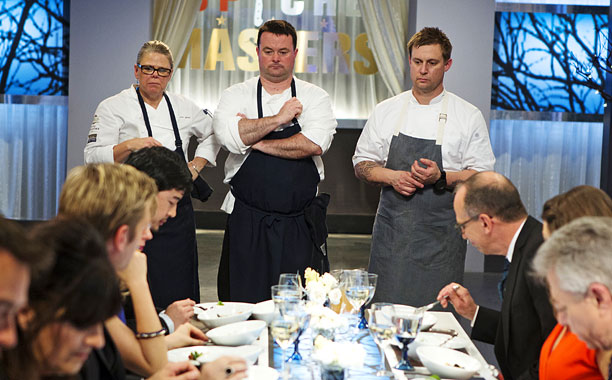
No Master Chef Final would be complete without a panel of judges whose palates are as discerning as they are diverse. For this Top Chef Masters finale, the chefs faced an extraordinary lineup, a culinary dream team comprising some of the most respected voices in food journalism and criticism: Alan Richman, Jane Goldman, Hadley Timicki, James Oseland, Gail Simmons, Ruth Reichl, Francis Lam, and Lesley Suter. This assembly represented a formidable challenge in itself; satisfying such a breadth of experience and personal taste is incredibly difficult. Their reactions, ranging from gushing praise for Bryan's "beige" crab to utter delight over Douglas's mussel dish, provided critical feedback and validated the immense effort poured into each plate.
The judges' detailed critiques, often highlighting specific textures, innovative flavor pairings, or subtle imperfections like an overcooked duck, underscore the meticulous standards at this level of competition. Their collective expertise ensures that every dish is scrutinized from multiple angles – technical execution, creativity, adherence to the challenge, and most importantly, taste. To learn more about how each dish fared under their intense scrutiny, you can delve into Top Chef Masters Finale: Reviewing Every Dish from "Something Old" to "Sous". Ultimately, earning praise from such an esteemed panel is a testament to a chef's ability to not only cook exceptionally but also to craft a compelling narrative on a plate.
The Top Chef Masters finale, with its "Courses of Your Career" challenge, transcended the typical cooking competition. It became a compelling narrative of passion, evolution, influence, and collaboration, beautifully articulated through food. From the deep roots of "Something Old" to the innovative heights of "Something New," the respectful homage of "Something Borrowed," and the collaborative spirit of "Something Sous," each dish told a story. The intense kitchen drama, the immense pressure of time, and the discerning palates of an unparalleled judging panel all contributed to a thrilling conclusion. This finale reminded us that true culinary mastery is not just about technique or ingredients, but about the journey, the stories, and the profound personal connection a chef brings to every plate. It was a fitting end to a season that showcased the very best of what it means to be a Master Chef Final contender.